Weight Management/Ingredients
Ikaria Lean Belly Juice Ingredients: The Full Label, Blend by Blend
Ikaria Lean Belly Juice ingredients explained: the Metabolic, Polyphenol and Digestive blends, nine probiotic strains and what each named ingredient is.
- From $39 per bottle
- 180-day refund
- Weight Management
By Supplement Health Expert Editorial Team · · 9 min read
- Refund window
- 180-day money-back guarantee on every package; the seller's returns page counts the 180 days from shipping and accepts empty or unopened bottles back, with return postage paid by the buyer
- Lowest per bottle
- $39 largest bundle
- Category
- Weight Management
- Our score
- 8.9/10 editorial
Key takeaways
- 01 One 3.2 g scoop carries four blocks: a 1,000 mg Metabolic Blend, a 1,000 mg Polyphenol Blend, a 325 mg Digestive Blend and a 125 mg 9 Strain Probiotic.
- 02 Only blend totals are printed, so no amount is stated for any single ingredient.
- 03 The green tea leaf extract is standardized to under 1% caffeine, so the drink holds a trace of caffeine.
- 04 Other ingredients are maltodextrin, natural flavors, citric acid and stevia leaf extract.
Anyone who has stood in a supplement aisle knows the first move: flip the tub and read the panel. Here that is easy. Four blocks are named, each with a printed total, and a short closing list follows. The sections below walk through every line in plain words, so you know exactly what would go into your glass.
The label at a glance
One serving equals one 3.2 g scoop, and a tub provides 30. Totals are per serving, in label order, and the panel lists no Daily Value for any block.
| Block | Per serving | Ingredient | Part or standardization |
|---|---|---|---|
| Metabolic Blend | 1,000 mg | Dandelion | Root powder |
| Turmeric | Root powder | ||
| Citrus pectin | |||
| Green tea | Leaf extract; 98% polyphenols, 50% EGCG, 80% catechins, under 1% caffeine | ||
| Kelp | Extract, 10% fucoxanthin | ||
| Milk thistle | Seed extract, 80% silymarin | ||
| Panax ginseng | Root powder | ||
| Black pepper | Fruit extract, 95% piperine | ||
| Japanese knotweed | Root extract, 98% resveratrol | ||
| Polyphenol Blend | 1,000 mg | Beet | Root powder |
| Hibiscus | Flower powder | ||
| Strawberry | Juice powder | ||
| Acai | Juice powder | ||
| African mango | Seed extract | ||
| Black currant, blueberry, cranberry, grapefruit, pomegranate, raspberry | Powders | ||
| Digestive Blend | 325 mg | Inulin | From Jerusalem artichoke root |
| Oat fiber | Powder | ||
| 9 Strain Probiotic | 125 mg | Nine strains | 3 billion CFU at the time of manufacture |
Other ingredients on the label: maltodextrin, natural flavors, citric acid and stevia leaf extract.
What each block is
Here we say what each item is and make no effect claims of our own. The seller’s aims belong to the formula as a whole, and they stay with the seller.
The Metabolic Blend
First on the label, this is the plant-extract block. Nine ingredients split one 1,000 mg total, so no single amount is known.
- Dandelion root is a familiar garden plant whose root is traditionally used in herbal teas.
- Turmeric root is the golden spice of curries, also traditionally used in herbal practice.
- Citrus pectin is a soluble fiber from citrus peel.
- Green tea leaf extract is the best-studied name here. The label gives its standardization and notes under 1% caffeine, which is why we describe the drink as holding a trace.
- Kelp extract comes from brown seaweed and is standardized to 10% fucoxanthin, a pigment found in brown algae.
- Milk thistle seed extract is standardized to 80% silymarin and has a long history in traditional herbal products.
- Panax ginseng root is a root traditionally used in many herbal formulas.
- Black pepper fruit extract is standardized to 95% piperine, the compound that gives pepper its bite.
- Japanese knotweed root extract is a plant source of resveratrol, a compound also found in grape skins. The label standardizes it to 98%.
The Polyphenol Blend
Polyphenols are the plant compounds behind the deep colors of berries and flowers. This is the fruit-bowl half of the panel, with beet root, hibiscus flower, strawberry and acai juice powders, African mango seed extract, and powders of black currant, blueberry, cranberry, grapefruit, pomegranate and raspberry. Weighing in at 1,000 mg, it ties the Metabolic Blend for largest.
The Digestive Blend
Two fibers fill this 325 mg block. Inulin, taken from Jerusalem artichoke root, is a prebiotic fiber, the sort that probiotic bacteria are known to feed on. Oat fiber is simply the fibrous part of the oat grain.
The 9 Strain Probiotic
Nine strains share the 125 mg block: six Lactobacillus (acidophilus, salivarius, plantarum, rhamnosus, fermentum, reuteri) and three Bifidobacterium (lactis, bifidum, longum). Together they supply 3 billion CFU as of manufacture. CFU stands for colony-forming units, so the figure describes the day the product was made, not the day it is stirred.
What the formula is meant for
The seller frames the product as support for metabolism, energy and digestion within a weight-management plan that includes balanced meals and movement. That is its stated purpose as a whole, not a promise about any one line. The seller’s page also highlights eight key ingredients, and all eight can be found in the table above.
Other ingredients
Four lines close the panel. Maltodextrin is a carbohydrate used as a carrier, natural flavors give taste, citric acid adds tartness and stevia leaf extract is a plant sweetener. Together they make the powder taste like a drink rather than a herbal tub.
What the seller says about production
On the seller’s account, production is US-based, at a GMP-following facility that is FDA-registered. We pass that on as the seller’s statement. The part you can check yourself is the label.
How the blocks line up
Everything is in milligrams, so here is the same panel sorted by size.
| Block | Total | Place on the label |
|---|---|---|
| Metabolic Blend | 1,000 mg | Joint largest, plant extracts |
| Polyphenol Blend | 1,000 mg | Joint largest, fruit and berry powders |
| Digestive Blend | 325 mg | Third, two fibers |
| 9 Strain Probiotic | 125 mg | Smallest, nine strains |
Questions for your pharmacist
Take these along if you would like a second pair of eyes on the label.
- Does any line overlap with another supplement I use?
- Could green tea, kelp, ginseng, resveratrol, milk thistle, black pepper extract or turmeric matter for my medicines?
- Is it suitable if I am pregnant, nursing, or have a thyroid, liver or gallbladder condition?
Keep taking your prescribed medicines. The seller also advises against stacking it with supplements built on similar ingredients, so describe your whole shelf.
Habits for reading any supplement label
- Begin with the serving size. Here, a 3.2 g scoop.
- Count servings. One tub gives 30.
- Notice the blends. A blend total names the group, not each member.
- Look for the plant part. Root, leaf, seed, fruit and flower are all named.
- End on the last line. Other ingredients show what carries the rest.
Using it
The serving on the label is a scoop a day, in the morning, and it is worth staying inside it. A tub covers 30 days, three cover 90 and six cover 180. Choose the supply you will realistically use.
Why an open label matters
An open label does what a sales page cannot: it lets you check for yourself. Four block totals and a closing ingredients line let you set this drink against anything else on your shelf, put a precise question to your pharmacist or simply decide you are comfortable. That clarity, backed by a 180-day refund promise on every package, helps explain the 9.0 it earns for ingredient selection in our review.
Official bundle pricing
As listed on the official order page · checked Nov 10, 2026
1 bottle30-day supply
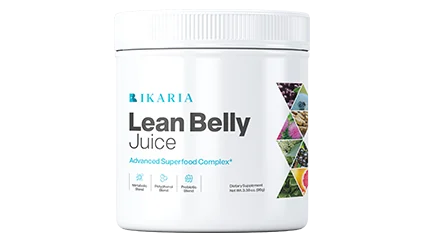
$69per bottle
Total $69
- Plus $9.95 US shipping
- 180-day money-back guarantee
3 bottles90-day supply
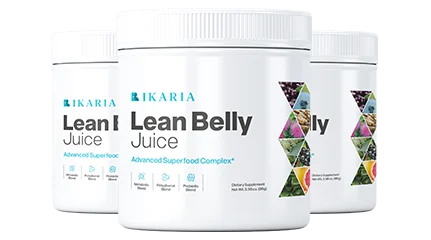
$59per bottle
Total $177
- Free US shipping
- 3 free bonuses
- 180-day money-back guarantee
Best value
6 bottles180-day supply
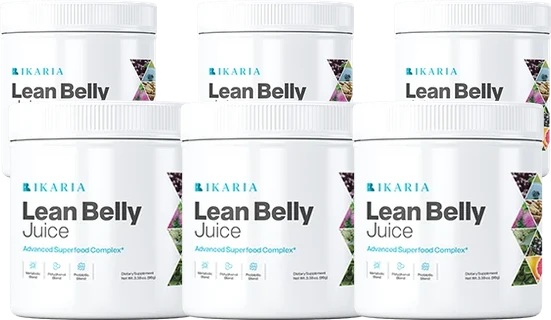
$39per bottle
Total $234
- Free US shipping
- 3 free bonuses
- 180-day money-back guarantee
Refunds: 180-day money-back guarantee on every package; the seller's returns page counts the 180 days from shipping and accepts empty or unopened bottles back, with return postage paid by the buyer.
Frequently asked questions
What are the Ikaria Lean Belly Juice ingredients?
Four blocks per scoop: a Metabolic Blend of nine plant ingredients, a Polyphenol Blend of fruit, berry and other plant powders, a Digestive Blend of inulin and oat fiber, and a 9 Strain Probiotic. Maltodextrin, natural flavors, citric acid and stevia leaf extract complete the label.
How much of each ingredient is in a serving?
The label prints block totals only: 1,000 mg, 1,000 mg, 325 mg and 125 mg. Amounts for individual ingredients are not published, so we do not state any.
Does it contain caffeine?
A trace. The green tea leaf extract on the label is standardized to under 1% caffeine.
What are the nine probiotic strains?
L. acidophilus, L. salivarius, L. plantarum, L. rhamnosus, B. lactis, B. bifidum, L. fermentum, L. reuteri and B. longum, totaling 3 billion CFU at the time of manufacture.
Is it free from gluten, dairy and soy?
The seller says it is free from gluten, dairy, soy, wheat, barley and animal products. That is the seller's statement, and the Supplement Facts panel is the place to confirm it.
What are the other ingredients?
Maltodextrin, natural flavors, citric acid and stevia leaf extract.
Should I show the label to my doctor?
It is a good idea if you take medication, are pregnant or nursing, or have a medical condition. Green tea, kelp, ginseng, resveratrol, milk thistle, black pepper extract and turmeric are all in the formula.
ikaria lean belly juice ingredients · ikaria lean belly juice label · ikaria lean belly juice supplement facts · lean belly juice ingredients · green tea kelp dandelion drink mix · 9 strain probiotic · ikaria lean belly juice