Joint & Nerve Support/Safety
Neuro-Balance Therapy Safety: Asking Your Doctor, Setting Up Your Space and Sensible Use
Neuro-Balance Therapy safety guide: when to ask a doctor first, how to set up a safe practice space, care with the spike ball and a gentle way to begin.
- From $37 one-time price
- 60-day refund
- Joint & Nerve Support
By Supplement Health Expert Editorial Team · · 7 min read
- Refund window
- 60-day money-back guarantee; digital buyers ask through ClickBank order support, DVD buyers return the DVD at their own postage and the refund excludes shipping and handling
- Price from
- $37 one-time
- Category
- Joint & Nerve Support
- Our score
- 8.9/10 editorial
Key takeaways
- 01 Ask your doctor before starting any balance or exercise routine, especially after a fall or surgery.
- 02 Practice beside a sturdy chair or counter, and use a supportive seat for seated moves.
- 03 Start gently and stop if there is pain or you feel unwell.
- 04 Skip the spike ball on broken skin or numb feet unless your doctor agrees.
Any new movement habit brings a few common-sense cautions, and a balance routine earns a little extra attention because you practice on your feet. What follows is calm and practical: when to talk to your doctor, how to arrange the room and how to ease in. Unless we say otherwise, the advice is ours, not the seller’s.
What the seller says
In its terms, the seller states that the program does not stand in for medical advice and points readers to a health care professional before acting on it. We agree, and we would put that at the top of any checklist. This is a set of exercises to follow at home, not a medical service.
Speak to your doctor first
A short chat before you begin is the best single step. It matters most if any of these fit you:
- A recent fall or surgery.
- Dizziness or lightheadedness.
- Neuropathy or numb feet.
- A joint replacement.
- Osteoporosis.
- Any other medical condition, or a medicine that changes how steady you feel.
Describe the routine to them: brief sittings at home, some in a chair, some standing, with a spiky massage ball under the foot.
Arrange a safe space
- Stand beside something solid. A sturdy chair or the kitchen counter within reach is the simplest safeguard.
- Clear the floor. Rugs, cables and clutter should go elsewhere.
- Choose a supportive seat for seated moves. Firm, stable, no wheels.
- Wear clothes you can move in.
- Light the room well. You want to see the floor and the screen.
Begin gently
Open the Beginner tier and keep sittings brief. The seller itself talks about minutes a day, so there is no reason to push. If a move seems like too much, skip it for now, or watch the lesson once without doing it and return later.
Know when to stop
- Pain means stop.
- Feeling unwell, dizzy or breathless means stop.
- A sense that you might lose your balance means sit down.
Tomorrow is another day. Nobody gains anything from finishing a session they are not comfortable with.
Unexplained unsteadiness needs a check
Feeling unsteady for no clear reason, or having had a fall, deserves a medical look in its own right. Medicines, blood pressure, eyesight and the inner ear can all play a part, and a doctor is the person to sort through them. A home routine does not replace that conversation.
Care with the spike ball
The exercises are built around a small spiky massage ball that you roll under the foot. A ball like that can bruise sensitive skin. Our advice:
- Leave it out on broken skin.
- Leave it out on numb feet unless your doctor agrees.
- Begin with light pressure and add more only if it feels fine.
- Stop the moment it hurts.
The $37 download comes without a ball and the $47 box includes one. If you bring your own, the same care applies.
Side effects
We cannot quote side effects from the seller, so we stick to practical cautions. Watch for muscle soreness, tiredness and skin tenderness under the ball. If anything feels worse than mild, pause and ask your doctor.
A sensible-use routine
- Check with your doctor.
- Place the chair or counter.
- Clear the floor.
- Start with a first-tier lesson.
- Keep it short.
- Stop for pain or feeling unwell.
- Make a note of how you felt afterwards.
Keep a simple record
One line per session is plenty: what you did, how it felt, anything odd. If you later see your doctor, those notes are handy to bring.
Questions to take to your doctor
- Is a routine like this, seated and standing, suitable for me?
- Could any of my medicines affect how steady I feel?
- Is a spike ball safe for my feet?
- How long should I practice at first?
- Which signs mean I should stop and call you?
Easy to try, easy to stop
You can go slowly, stop at any moment and use the 60-day promise if the program is not for you. Our price page explains the route for each edition.
Neuro-Balance Therapy Official Pricing
As listed on the official store · confirm at checkout
Digital version
$37
One-time payment
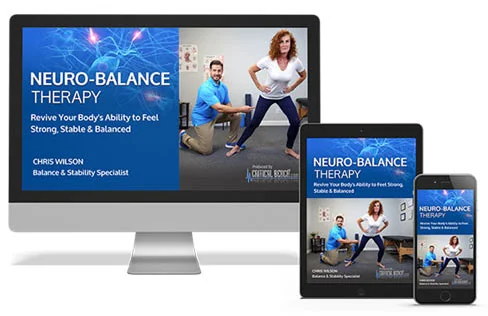
- Follow-along video sequences: Beginner, Intermediate, Advanced
- Digital manual with exercise pictures
- Top 20 Tips bonus guide
- No DVD and no spike ball included
- 60-day money-back guarantee
Physical DVD edition
$47
One-time payment
- Plus shipping and handling, shown at checkout
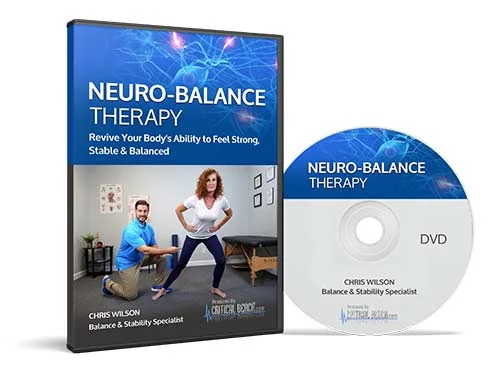
- DVD series and one spike ball, shipped
- Digital version included right away
- Top 20 Tips bonus guide
- 60-day money-back guarantee
A one-time digital purchase, with download or stream access after checkout. The checkout shows local currency and any tax, so the final amount can differ. Refunds: 60-day money-back guarantee; digital buyers ask through ClickBank order support, DVD buyers return the DVD at their own postage and the refund excludes shipping and handling.
Frequently asked questions
Is Neuro-Balance Therapy safe to try?
The seller's terms say the program is not a substitute for medical advice. Our advice is to ask your doctor first, set up a stable space and start gently.
Who should ask a doctor first?
Anyone, ideally, and especially people who have had a fall or surgery, or who live with dizziness, neuropathy, a joint replacement, osteoporosis or another medical condition.
Does Neuro-Balance Therapy have side effects?
We cannot quote any from the seller, so we stick to practical cautions. Watch for strain, tiredness and sensitive skin under a spike ball, and stop if something hurts.
Can I use the spike ball on numb feet?
Not without your doctor's agreement. A spike ball can bruise sensitive skin, so skip it on broken skin or numb feet unless your doctor says it is fine.
neuro-balance therapy safety · neuro-balance therapy side effects · is neuro-balance therapy safe · neuro-balance therapy spike ball · balance exercises doctor