DIY & Home Projects/Safety
Water Freedom System Safety: Treat Water, Local Rules
Water Freedom System safety notes: treat or test water from any home device, expect output to shift with humidity, and follow local rules and electrical safety.
- From $39.69, one payment
- 60-day refund
- DIY & Home Projects
By Supplement Health Expert Editorial Team · · 7 min read
- Refund window
- A 60-day money-back guarantee. Email the seller at [email protected] with your full name, your order number and the subject Refund Request. Keep your confirmation email. ClickBank is the retailer.
- Price from
- $39.69 one payment
- Category
- DIY & Home Projects
- Our score
- 5.6/10 editorial
Key takeaways
- 01 Water from any home device should be treated or tested before drinking, and it should never be assumed drinkable.
- 02 Output from a humidity-based device depends on humidity and temperature, so one reading or one day tells you little.
- 03 Follow local rules and electrical safety, and get qualified help for mains power, cooling hardware and plumbing.
- 04 The seller's own pages give no purity or safety information.
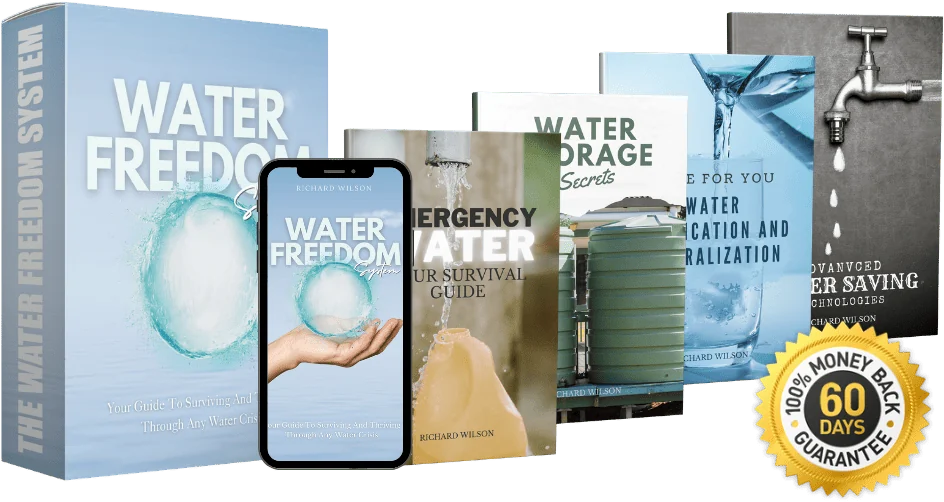
Water Freedom System comes as a digital guide, PDF and video files, that the seller says explains how to build a compact unit for gathering water out of humid air. This page concentrates on safety. It lays out three core ideas, notes what the seller’s pages omit and suggests an order of work to follow before any equipment is handled.
What the seller’s pages omit
We went through the sales page text, the help pages, the refund page and the contact page. None of them provides purity figures, test results or safety instructions for water from a device. The sales presentation is a video, which we did not sit through, so we report nothing from it. Treat that gap as yours to close before you drink anything a build produces.
The seller’s disclaimer notes that the presentation may feature actors and that the author writes under a pen name. We record that once. A confident face or voice does not amount to a test result, and it reveals nothing about what the water contains. If you do collect water, record where and when each sample was taken. A label like that makes any later testing more useful to the laboratory and to you.
Idea one: treat or test before drinking
Before anyone drinks water from a home device, that water needs treatment or testing. Air is not a fixed source. It can hold dust, pollen and microbes, and the collection surface, the container or the tubing can each add material of their own. Never assume output is fit to drink merely because a device you assembled produced it, or because a guide describes the method.
Set your treatment or testing plan before the first build day. Speak with a local laboratory or a water professional about what to check and which treatment suits the water you expect. Store output covered, label it untreated until it has been handled, and throw out anything whose look, smell or taste seems off. Never taste unknown water to check it.
Idea two: humidity and temperature change the yield
A device that collects water from air reacts to the air around it. Humidity and temperature move through the day and across the seasons, and the yield moves with them. A good result on a damp morning says little about a dry afternoon, and a day or two of readings reveals no trend.
Keep a simple record if you build: the date, the time, the temperature, the humidity and the volume collected. Over several weeks the record reveals a trend that no single number can. The seller’s pages give no output figures, and we repeat none from the video. Your own record will be the only real data you hold.
Idea three: local rules, electrical safety and qualified help
Local rules can cover a home device. Building permits, plumbing codes and water-source regulations may reach a home modification, and neighbouring towns may differ. Check with your local authority before you fix anything to a wall, a roof or a water line.
Electrical work outweighs everything else in a build. Mains power, cooling hardware and wiring belong with a licensed electrician. Keep electrical parts clear of water, fit proper circuit protection, and never work on a live circuit. Compressors and fans run hot, and refrigerant equipment carries its own handling rules, so bring in qualified help for that hardware as well.
Plumbing also needs a qualified person. A loose joint can flood a room, damage a structure and contaminate a supply, and repairs afterwards generally cost more than a professional visit beforehand.
A simple order of work
Before spending on parts, work through these steps in sequence:
- Read the complete guide, not just the materials list, and flag every stage that involves power, water or heat.
- Consult your building or water authority about local requirements.
- Arrange qualified help for mains power, cooling hardware and plumbing.
- Settle on a treatment or testing method, ideally with a local laboratory’s input.
- Start a log covering temperature, humidity and volume before the device runs.
If something goes wrong
Stop the device immediately and cut its power at the breaker. Do not drink what it has produced, and keep that water out of cooking and infant formula. If a joint leaks, shut the supply valve and call a qualified plumber. If anyone drinks water of unknown quality and becomes unwell, call a doctor or your local health service right away rather than waiting to see whether symptoms settle.
Plan ahead. Note who you will call, where the breaker and the water valve are located, and which testing service is nearest before any work begins.
What this page does not cover
We have not tested the device, and we have not studied the build steps in detail. We cannot tell whether the design suits your home, your climate or your local rules. This page gives general safety ideas only. Keep this page open beside the guide when you reach the build sections, so the three ideas stay in view. It is no substitute for a licensed electrician, a plumber, a water professional or your local health service.
Questions to answer before ordering
If you cannot explain how you will treat or test the water, the build is not ready, whatever the guide says. The same applies when no qualified electrician or plumber is available for the job. Refund requests have a 60-day window, but a refund leaves the work itself unchanged. Your plan must come from you, your local advisers and the rules where you live.
Water Freedom System Official Pricing
As listed on the official store · confirm at checkout
Water Freedom System digital guide
$39.69
One payment
- PDF and video files, delivered after checkout, as the seller describes them
- A step-by-step guide, the seller says, for building a small home device that collects water from humid air
- A quick-start guide and a materials list, as the seller describes them
- $39.69 in one payment, with no subscription, per the seller
- 60-day money-back guarantee
Water Freedom System printed book with digital guide
$49.64
One payment
- Printed book shipped in the US, plus the digital guide
- $39.69 plus $9.95 shipping and handling, US only
- Shipping and handling are not refundable (seller)
- The digital guide arrives with the book, as the seller lists it
- Refund options for the book, per the seller's refund page
One payment at checkout, with download or stream access after checkout. The checkout shows local currency and any tax, so the final amount can differ. Refunds: A 60-day money-back guarantee. Email the seller at [email protected] with your full name, your order number and the subject Refund Request. Keep your confirmation email. ClickBank is the retailer..
Frequently asked questions
Is the water from a Water Freedom System build ready to drink?
We cannot say, because the seller's pages give no purity or safety information. Water from any home device should be treated or tested before drinking, and it should never be assumed drinkable.
Why does the output change from day to day?
A humidity-based device depends on humidity and temperature, and both change through the day and across seasons. One reading or one day tells you little about the next.
Do I need an electrician for the build?
Mains power, cooling hardware and any wiring should be handled by a qualified electrician. Plumbing connections also need qualified help.
Do local rules apply to a home device?
They may. Building permits, plumbing codes and rules on water sources can apply to a home alteration, so check with your local authority before you build.
What should I do if something goes wrong?
Stop the device, switch off its power at the breaker, do not drink the water, and contact a qualified person. If someone has drunk the water and feels unwell, contact a doctor or your local health service.
Water Freedom System safety · Water Freedom System electrical safety · Water Freedom System local rules · home water from air safety · WFS safety · Water Freedom System drinking water