Ingredients / Guide
GRS Ultra Ingredients: The Three Named Parts and What the Label Says
GRS Ultra ingredients in the seller's words: SelenoExcell selenium, NAC and Red Orange Complex. No amounts on the pages we read, so check the bottle's panel.
- Author
- Supplement Health Expert Editorial Team
- Updated
- Reading time
- 7 min
- Sources
- 0 cited
Key takeaways
- 01 The seller names three ingredients: SelenoExcell selenium, N-acetyl-cysteine (NAC) and Red Orange Complex.
- 02 The pages we read print no amounts, so the full Supplement Facts panel on the bottle is the place to check.
- 03 Red Orange Complex is a blood-orange extract the seller traces to Moro, Tarocco and Sanguinello oranges near Mount Etna.
- 04 Glutathione is something your body makes, and the seller says the capsule supports that process rather than replacing it.
- 05 Anyone on medicines, pregnant or nursing, or with an allergy should ask a doctor or pharmacist before starting.
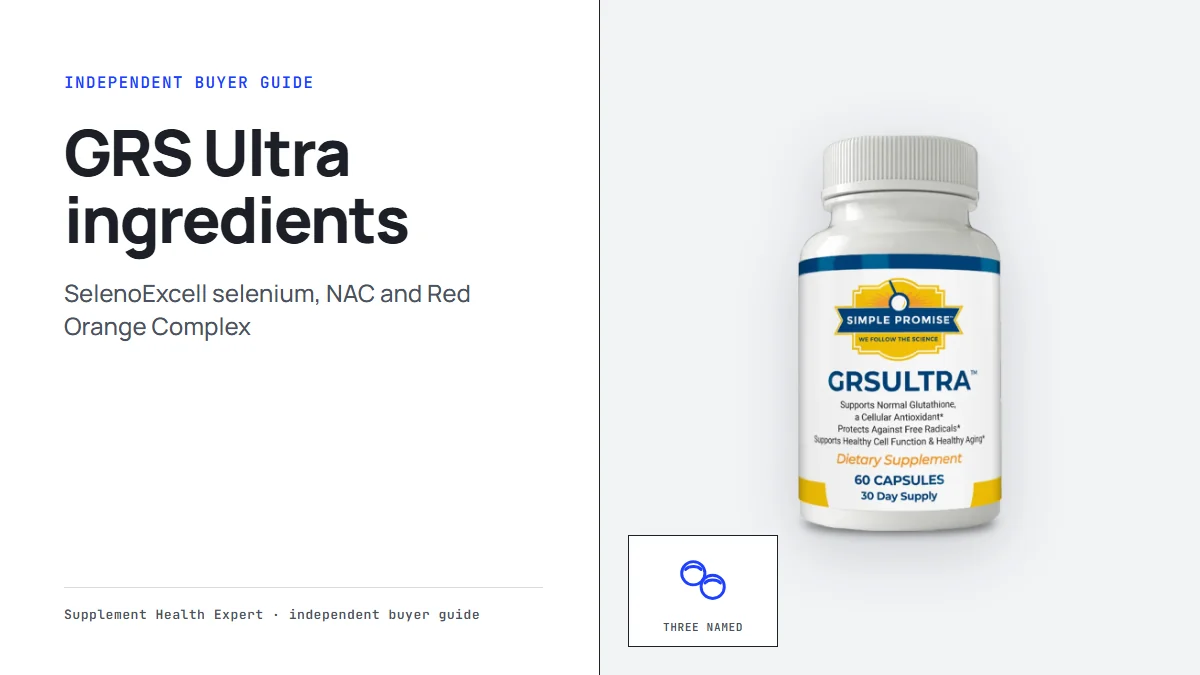
GRS Ultra ingredients are the first thing a thoughtful buyer wants to see, and this formula keeps its list short. The seller names three: SelenoExcell selenium, N-acetyl-cysteine and Red Orange Complex. They sit inside a daily capsule that the seller says is built to support your body’s own glutathione. Below, each name appears in the seller’s soft wording, with a plain explanation of what it is and what the bottle should show you.
GRS Ultra Ingredients at a Glance
| Name on the seller’s page | What the seller says |
|---|---|
| SelenoExcell | A branded selenium |
| N-acetyl-cysteine (NAC) | Named in full, with NAC as the short form |
| Red Orange Complex (ROC) | A branded blood-orange extract from Sicilian oranges |
Each row above is the seller’s description. No amount sits next to any of the three on the pages we read.
SelenoExcell and Selenium
Selenium is a trace mineral found in many foods, and the seller uses a branded version called SelenoExcell. A brand name tells you which form the seller chose, though it does not say how much the capsule holds. That detail belongs on the Supplement Facts panel. If you already take a multivitamin or another supplement, look at its label too, so you can see the total picture before you add anything new.
N-Acetyl-Cysteine, Written Out in Full
The seller lists the second ingredient by its full name, N-acetyl-cysteine, and uses NAC as the short form. Written out, the name is long, which is why the short form is handy on a label. Because NAC is a named ingredient, it belongs on the list you take to a pharmacist when you read the bottle. Think of it as a line to ask about, not a line to skip.
Red Orange Complex and the Sicilian Oranges
Red Orange Complex, or ROC, is the seller’s name for a blood-orange extract. The seller says it comes from three kinds of Sicilian orange, the Moro, the Tarocco and the Sanguinello, grown near Mount Etna. The seller’s page also mentions anthocyanins, the pigments that give blood oranges their deep color. Read that as the seller’s description of its own ingredient, since the pages we read give no amounts for it.
Glutathione, Explained Neutrally
Glutathione is a compound your body makes on its own. It takes part in many processes and is often discussed alongside antioxidants. GRS Ultra is not glutathione itself, the seller says. Its three ingredients are meant to support the body in making its own supply. The bottle says the product supports normal glutathione, a cellular antioxidant, and healthy cell function. That is the seller’s aim, printed on its label, and it is not a result we can promise.
Where the Amounts Should Appear
The pages we read name the three ingredients but print no amounts, so we will not quote a figure here. The full Supplement Facts panel is printed on the bottle you receive. Read it there, compare every line with what you already take, and ask your doctor about any line you are unsure of. Follow the directions on the bottle, which is the only dosing guide we point to.
Who Should Ask First
Ingredient names matter most for some readers. Keep taking any prescribed medicine, and ask your doctor or pharmacist before you start if you are pregnant or breastfeeding, if you have a chronic condition or take medication, or if you have a known allergy to any ingredient. Because selenium and NAC are named, people who take blood thinners or nitroglycerin, or who have surgery planned, should ask before the first capsule. This is our own general advice, and it applies to any supplement.
How to Read a Supplement Facts Panel
A Supplement Facts panel is the part of a label that lists what a serving contains. You will usually find the serving size, the amount of each named ingredient and a list of any other ingredients. Read the panel with three questions in mind: which of the three named ingredients appear, what the amount of each one is per serving, and how many capsules make up a serving. The directions printed beside the panel should match the directions on the bottle. If anything on the panel differs from what this page describes, raise it with the seller before you start.
Questions for Your Pharmacist About These Names
A pharmacist can read three names in a minute, so bring a short list:
- Do selenium or NAC overlap with a multivitamin, a mineral or another daily product I already take?
- Does either name need extra care with my current prescriptions?
- Am I allergic to any ingredient on the list, or to citrus fruit?
- Should I wait before starting if surgery is planned?
The GRS Ultra product hub has the full file to bring along to that visit.
Why the Seller’s Wording Matters
The seller uses soft language on its own pages. The bottle says the product supports normal glutathione, and the seller says its ingredients support the body in making its own supply. That wording describes an aim, not a result. Reading it that way keeps your expectations honest and your questions focused. It also means you can check each line against the bottle when it arrives, which is more useful than trusting a headline on any page.
What the Three Names Do Not Tell You
Three names are a starting point, not the full picture. They do not reveal how much of each ingredient a capsule holds, how the product is made or how any one body will respond. Those answers come from the panel and from a qualified professional. Keep that in mind when you compare two supplements, including any that name the same ingredient under a different brand.
Reading the Three Names as a Set
The three names work together on this label, so read them as a set rather than one at a time. Selenium and NAC are names that may already appear on other labels in your cupboard, which makes them easy to compare. Red Orange Complex is less familiar, because it is a branded extract rather than a common chemical name. Its description on the seller’s page is the only place we can point you to, so read it as the seller’s words and check the panel for the rest.
Building the Capsule Into a Daily Routine
A daily capsule works best when it has a fixed time. Breakfast, a morning glass of water or a bedtime habit can all serve as an anchor. Store the bottle somewhere dry, since the seller’s FAQ notes that heat and moisture can make capsules smell. The seller describes the capsules as small and easy to swallow, with no odor. Keep the directions printed on the bottle beside the bottle itself, so you never have to guess. If you travel, keep the bottle in its original container so the label stays with the capsules.
What a Clear Ingredient List Gives You
A short list is easier to discuss than a long one. You can read three names to a pharmacist in seconds, match them against your medicines and allergies, and decide with a clear head. That is the practical reason we keep this page focused on the names and the wording the seller uses. For the safety side, the GRS Ultra side effects guide sets out the cautions in more depth, and the ingredients page keeps the same list in a shorter form.
Our review and price guide cover the rest of the buying decision, and the GRS Ultra product hub holds the full file.
Frequently asked questions
What ingredients are in GRS Ultra?
The seller names three: SelenoExcell, a branded selenium, N-acetyl-cysteine (NAC) and Red Orange Complex, a branded blood-orange extract.
How much of each ingredient is in a capsule?
The pages we read do not print amounts. The full Supplement Facts panel is printed on the bottle you receive, so read it there and ask your doctor about any line you are unsure of.
What is Red Orange Complex?
The seller describes it as a blood-orange extract made from Moro, Tarocco and Sanguinello oranges grown near Mount Etna in Sicily, and says it contains anthocyanins.
Is GRS Ultra glutathione?
According to the seller, no. The capsule holds three ingredients that the seller says support your body in making its own glutathione, which the bottle calls a cellular antioxidant.
Are there ingredients I should ask about first?
Selenium and NAC are named on the label, so anyone with a known allergy to an ingredient, anyone on blood thinners or nitroglycerin, and anyone with surgery planned should ask first. This is our own general advice.
Can I see the ingredient list before I buy?
The seller's pages list the three names without amounts, so the bottle is the full source. Check the label when it arrives and keep taking any prescribed medicine.
grs ultra ingredients · grs ultra ingredient list · grs ultra selenium · grs ultra nac · grs ultra red orange complex · selenoexcell · grs ultra glutathione ingredients