DIY & Home Projects/Comparison
Energy Revolution System vs a Solar Kit or Online Articles
How the $39 Energy Revolution System guide compares with a ready-made solar panel kit and with online DIY power articles, in general terms, without brand names.
- $39, one payment
- 60-day refund
- DIY & Home Projects
By Supplement Health Expert Editorial Team · · 7 min read
- Refund window
- A 60-day money-back guarantee. Email [email protected] with your full name, your order number and the subject Refund Request. Keep your confirmation email. ClickBank is the retailer.
- Price
- $39 one payment
- Category
- DIY & Home Projects
- Our score
- 5.4/10 editorial
Key takeaways
- 01 A ready-made solar panel kit comes with a manufacturer warranty and installation instructions. A DIY guide does not.
- 02 The Energy Revolution System guide is a $39 digital document, and it ships nothing.
- 03 Permits, codes and a licensed electrician apply to home power work, whichever route you take.
Anyone weighing a home power project has about three roads to pick from. One is to buy a boxed solar panel kit. Another is to piece things together from online DIY articles. The third is to follow a single written guide such as Energy Revolution System. Every road fits a different kind of reader and leaves a different set of chores on your plate. We lay out those differences fairly below, keeping the guide’s $39 price in sight.
Against a boxed solar panel kit
A solar panel kit is a physical purchase. Hardware turns up at your door, typically with a maker’s warranty and a printed or digital set of installation steps. The warranty gives you someone to call if a component fails inside its term, and the steps give you an order of work. For a buyer who wants equipment in hand and a named support path, those are real strengths.
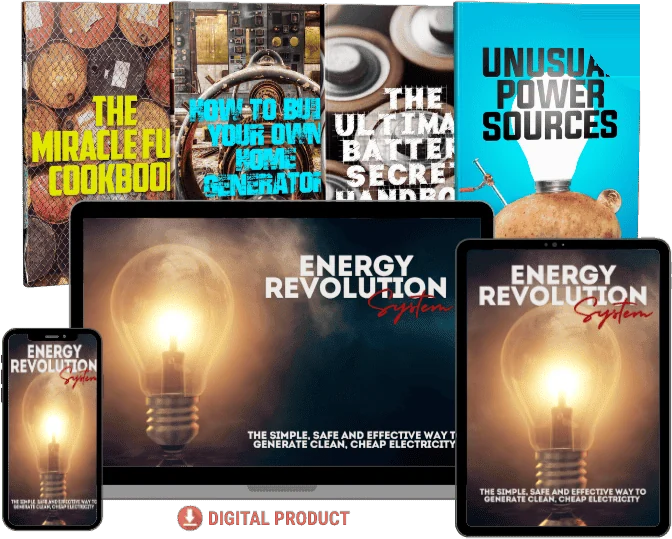
Energy Revolution System sits in another category altogether. It is a PDF, and the seller presents it around one home-scale power build. Nothing ships with it, and no manufacturer backs it with a warranty. Sourcing parts falls to you, which opens up a wider choice of components along with extra responsibility for vetting them. The seller’s refund route covers the guide itself and not any parts you go on to buy.
Installation is where the two routes meet. A kit or a build that feeds into a structure needs a licensed electrician and local permits, because wiring rules and inspections reach both. A slip with live wires risks a shock or a fire; keep any generator that burns fuel from running indoors. Neither route lets you skip that step, and even a kit with tidy instructions needs qualified hands for the link to a house.
Think about when your money leaves your account. With a kit, most of the outlay lands up front, in equipment you can see on arrival. With a guide, spending is spread out: parts you pick over time, plus the fees a licensed electrician charges for professional work. Neither pattern wins in general. It comes down to how much of the work you want to run yourself.
Against online DIY power articles
Articles are a common place to start researching home power. Some are well written, quick to read and carefully sourced. Their usual weak point is structure. You may collect steps from several pages, check which of them still hold, and fill in the missing pieces on your own.
One PDF can close that gap. The guide lays out the seller’s plan as a single document, and the seller points to a starter guide and a parts checklist within it. For someone who wants one sequence to follow, that beats a scatter of web pages. The cost is that you get one author’s plan and cannot read the whole thing in advance, whereas a public article can be read from top to bottom before you commit.
Articles also come without any refund process. If one steers you wrong, you are left with only your own good sense. The guide, by contrast, has a seller behind it, a contact address and a written refund procedure, so questions have somewhere to go and you have a way out if the material falls short.
Cost and what you receive
Price shows the sharpest contrast. The guide is $39 in one payment and brings no hardware. A kit includes equipment, so its price reflects the parts in the box. Articles cost nothing to read, but stitching a plan together from them eats hours, and people tend to underrate that time.
Whichever way you go, plan for items that sit outside the purchase: parts for a guide, equipment for a kit, and permits plus electrical labor for both. A low entry price tells you little about what the finished build will cost.
Permits, codes and fire hazards
Home power work falls under local rules. Permits, electrical codes and fuel-storage regulations may reach you on any route, whether you pick a kit, a guide or a pile of articles. Ask your local authority first, and put anything that connects to the house in the hands of a licensed electrician.
Every route carries fire and shock hazards. Fuel-burning equipment belongs outdoors and must never run inside, and battery work calls for care. In its footer the seller flags that some changes to a dwelling may break local law, and that flag applies to every route covered here.
Matching the route to the reader
If you want hardware, a maker’s warranty and installation steps, look at a boxed kit. If you want one clearly priced document to read first, and you are ready to source parts and look up local rules, the guide may fit. If you like to research in small bites, start with articles and move on to a full plan once your questions sharpen.
You can also blend them. Articles give background, a guide gives sequence, and a kit gets bought only after permits and the electrical plan are settled. Taking them in that order ties each purchase to a question you have already answered.
What to check first, whichever way you lean
Begin with local rules. Ask about permits, inspections and any limits on home power equipment where you live. Next, read the warranty terms and installation guidance of any kit. With a guide, read the refund steps and the contents ahead of buying.
Those checks take far less time than a failed project eats up, and they apply to every option here. Once they are finished, choosing between hardware, articles and a guide becomes a practical matter of what you would rather hold, read and pay for first.
Energy Revolution System Official Pricing
As listed on the official store · confirm at checkout
Energy Revolution System digital PDF guide
$39
One payment · digital delivery
- A digital PDF guide, with a quick-start guide and a materials list, as the seller describes them
- Works on PC, Mac, tablet or phone, with a PDF reader installed
- $39 in one payment, with no subscription, according to the seller
- A download link by email after checkout; nothing ships
- 60-day money-back guarantee, requested by email to the seller
One payment at checkout, with download or stream access after checkout. The checkout shows local currency and any tax, so the final amount can differ. Refunds: A 60-day money-back guarantee. Email [email protected] with your full name, your order number and the subject Refund Request. Keep your confirmation email. ClickBank is the retailer..
Frequently asked questions
Is a guide better than a ready-made solar kit?
They are different products. A kit is physical equipment with a manufacturer warranty and installation instructions. A guide is a digital document with no hardware and no warranty of its own. Choose by what you need to hold in your hands.
Does a solar kit need an electrician?
Frequently, whenever something ties into a building. With a kit or with a guide alike, wiring that reaches the house calls for a licensed electrician and whatever permits your locality asks for.
Are online DIY articles enough?
Articles can be useful for reading. A single structured PDF, however, lets you follow one sequence from start to finish. Articles usually need piecing together, and their quality varies from one to the next.
Which option costs more to start?
The guide has one price of $39 and includes no hardware. A kit includes equipment, so its starting cost is a different kind of spending. Compare what each one actually contains before you settle on one, and price the parts and permits separately.
What should I check first?
Your local rules, the warranty and installation terms of any kit, and the contents and refund route of any guide. Those checks matter more than the label on either product.
Energy Revolution System vs · Energy Revolution System vs solar kit · DIY power guide vs solar kit · Energy Revolution System alternatives · home power DIY guide comparison