Everyday Wellness / Guide
Neuro-Balance Therapy Side Effects: A Calm Safety Guide for Home
Neuro-Balance Therapy side effects and safety: when to ask your doctor, how to set up your space, care with the spike ball and a gentle way to begin at home.
- Author
- Supplement Health Expert Editorial Team
- Updated
- Reading time
- 7 min
- Sources
- 0 cited
Key takeaways
- 01 Neuro-Balance Therapy is an exercise program, so there is nothing to swallow and no label to read.
- 02 The seller's terms say the program is not a substitute for medical advice.
- 03 Our advice: ask your doctor first, practice beside a sturdy chair or counter and start gently.
- 04 Stop for pain or if you feel unwell, and have unexplained unsteadiness or a fall checked.
- 05 The spike ball can bruise sensitive skin, so skip it on broken skin or numb feet unless your doctor agrees.
Anyone reading about Neuro-Balance Therapy side effects is doing the right thing: you are thinking about comfort before you begin. The reassuring starting point is simple. This is a guided exercise routine, so there are no pills to swallow and no label to worry about. The sensible cautions are the ones that go with any movement habit, plus a little extra care because you practice on your feet. Below is the calm version, in plain steps.
Neuro-Balance Therapy Side Effects: What to Expect
We cannot quote a list of side effects from the seller, and we do not invent any. What we can offer is practical guidance. After a new routine, mild muscle tiredness or soreness is the sort of thing any exercise can cause, and skin under a spike ball can feel tender. If anything feels worse than mild, pause and ask your doctor. Unless we say otherwise, the advice on this page is ours, not the seller’s.
What the Seller Says
In its terms, the seller states that the program is not a substitute for medical advice. We agree, and we would put that at the top of any checklist. The routine is a set of short sequences you follow on video: a few minutes a day at home, some seated, at Beginner, Intermediate or Advanced level, as the seller describes it. It is exercise, not a medical service.
Start With a Conversation
A short chat with your doctor is the best first step, and it matters most if any of these apply:
- A recent fall or surgery
- Dizziness or lightheadedness
- Neuropathy or numb feet
- A joint replacement
- Osteoporosis
- Any other medical condition, or a medicine that affects how steady you feel
Tell them what the routine involves: brief sessions, some seated and some standing, and a small spike ball rolled under the foot. Our safety fact sheet summarizes the same points on one page.
Set Up a Steady Space
A little preparation does most of the safety work.
- Stand beside something solid. A sturdy chair or the kitchen counter, within arm’s reach.
- Clear the floor. Rugs, cables and clutter belong elsewhere.
- Use a supportive seat for seated moves. Firm, stable and without wheels.
- Light the room well, so you can see the floor and the screen.
- Wear clothes you can move in, and footwear or bare feet as your doctor suggests.
Go Gently and Know When to Stop
You set the pace. Open the Beginner level, watch a lesson once before you try it and keep your first sessions short. If a move looks like too much, skip it for now or return to it later.
- Pain means stop.
- Feeling unwell, dizzy or short of breath means stop.
- A sense that you could lose your balance means sit down.
Nothing is gained by finishing a session you are not comfortable with. Tomorrow is another day.
Care With the Spike Ball
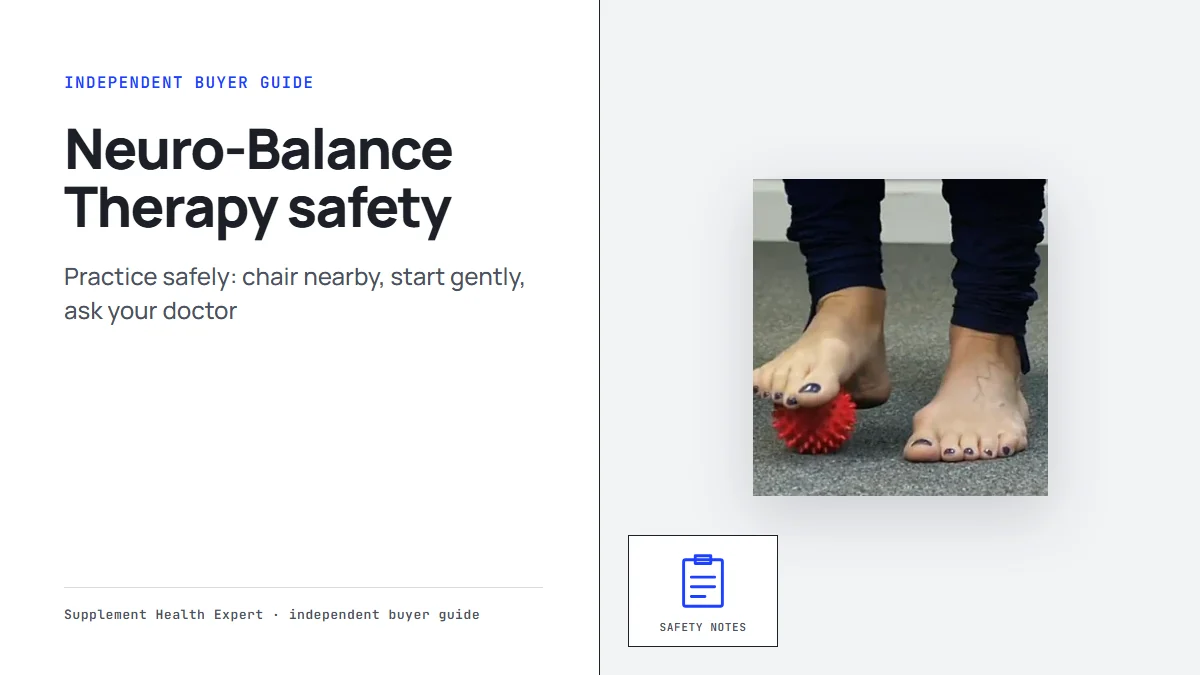
The exercises are built around a small massage ball with raised points that you roll under the foot. That can be pleasant, and it can also bruise sensitive skin. Our advice:
- Leave the ball out on broken skin.
- Leave it out on numb feet unless your doctor agrees.
- Start with light pressure and add more only if it feels fine.
- Stop as soon as it hurts.
A spike ball comes only with the $47 DVD edition. The $37 digital version does not include one, so if you bring your own ball, the same care applies.
Unsteadiness Deserves a Check
Feeling wobbly for no clear reason, or having a fall, is worth a medical look in its own right. Medicines, blood pressure, eyesight and the inner ear can all play a part, and a doctor can sort through them. A home routine is a companion to that conversation and never a replacement for it.
A Simple Safe-Use Routine
- Check with your doctor.
- Place the chair or counter within reach.
- Clear the floor around you.
- Begin with a Beginner lesson.
- Keep the session short.
- Stop for pain or feeling unwell.
- Jot a line afterwards about how it felt.
Those notes are handy if you later talk with your doctor, and they show you how the routine is fitting into your week.
Questions to Bring to Your Doctor
- Is a routine like this, seated and standing, right for me?
- Could any of my medicines affect how steady I feel?
- Is a spike ball safe for my feet?
- How long should I practice at first?
- Which signs mean I should stop and call you?
Why Starting Is Low Risk to Your Wallet Too
Comfort is not only physical. Both options carry a 60-day money-back guarantee, counted from the purchase date. A digital buyer asks through ClickBank order support, and a DVD buyer returns the disc at their own postage, with the refund minus shipping and handling. Our money-back guarantee guide lists each step. You can go slowly, stop whenever you choose and still have time to decide.
What Your First Week Could Look Like
Day one is for set-up and for watching a single Beginner lesson from your chair. Over the next days, try the moves you are comfortable with, in short sessions, at a time of day that suits you. Notice how you feel afterwards. Our what’s included guide lists the videos, the manual and the home-safety checklist that come with your order, and our Neuro-Balance Therapy overview gathers the rest of the details.
Who May Want Extra Care
Some situations call for a slower start and a firmer conversation with your doctor. If you are recovering from surgery, living with a joint replacement, managing osteoporosis or noticing numbness in your feet, ask what is suitable for you before the first lesson. Ask the same if you often feel lightheaded when you stand. A doctor may suggest sticking to the seated sequences for a while, or skipping the spike ball altogether, and that is a perfectly good way to begin.
Seated Moves Are a Gentle Option
The seller says some of the sequences can be done sitting down, even while you watch TV. For anyone who would like to build confidence before standing, that is a comfortable way in. Choose a firm chair without wheels, sit with both feet where you can see them and keep the screen at eye level so you are not craning your neck. If a standing move feels like too much on a given day, there is no rule against staying in the chair.
Helping a Parent or Friend Get Started
If you are ordering for someone else, set the scene before the first lesson. Offer to place a sturdy chair or help clear the floor, and encourage a quick word with their doctor. Sit with them for the first Beginner session if you can, and keep it short. Agree in advance that stopping is always fine. A calm, unhurried start does more for confidence than any single move.
Where to Read More
Our complete Neuro-Balance Therapy guide gathers the contents, prices and guarantee, and our what’s included guide lists exactly what you receive, so you can plan your practice space around it.
Our Take
We score Neuro-Balance Therapy 8.9/10 on our own editorial scale. With a doctor’s go-ahead, a steady chair, short sessions and a willingness to stop when something feels off, a guided home routine is a comfortable thing to try. The program is short by design and the guarantee gives you room to judge it.
Frequently asked questions
Does Neuro-Balance Therapy have side effects?
It is a set of exercises, not something you take, and the seller gives no list of reactions that we can quote. Ordinary exercise cautions apply: muscle tiredness, soreness and sensitive skin under a spike ball. Stop if something hurts.
Is Neuro-Balance Therapy safe to try?
The seller's terms say the program is not a substitute for medical advice. Our advice is to ask your doctor first, set up a stable space and begin gently.
Who should ask a doctor first?
Ideally everyone, and especially anyone after a fall or surgery, or with dizziness, neuropathy, a joint replacement, osteoporosis or another medical condition.
Can I use the spike ball on numb feet?
Not unless your doctor agrees. A spike ball can bruise sensitive skin, so leave it out on broken skin or numb feet.
What if I feel unsteady for no clear reason?
Have it checked. Medicines, blood pressure, eyesight or the inner ear can play a part, and a doctor is the right person to sort through them.
Can I stop if it is not for me?
Yes, at any moment. The 60-day guarantee also gives you time to decide, with a refund route for each edition.
neuro-balance therapy side effects · is neuro-balance therapy safe · neuro-balance therapy safety · neuro-balance therapy spike ball · balance exercises at home safety · neuro-balance therapy doctor · neuro-balance therapy risks